Emin Efendi Otel, Amasya Small & Boutique Hotels
Getting the best price

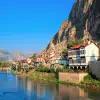
In Amasya, known as the City of Princes, there are many madrasas, mansions, and mosques. The city, which reflects the traces of history even today, offers many places to visit and see. Along with its natural beauty, Amasya is a city that you should definitely explore. Firstly, you should take a stroll or go on a bicycle tour along the shores of Borabay Lake, the only lake in the city. Its captivating scenery will refresh you and ease your fatigue. You can also visit the Yalıboyu Houses located along Yeşilırmak River, which have been restored, some of which are open to the public.
One of the most beautiful mansions among these is the Hazeranlar Mansion, which you should not miss visiting. After exploring these lovely architectural landmarks, cross the majestic bridge over the river and visit the Amasya Castle, which is located on the opposite side. At the foot of the castle, you will find five rock tombs carved into the cliffs, known as the King's Rock Tombs. However, in the valley area, there are many other rock tombs in different sizes. Don’t forget to take your camera! Apart from these tombs, there is another royal rock tomb called Aynalı Mağara (Mirror Cave) located on the ring road, which is truly worth seeing.
In addition to the mentioned places, you can find healing at Terziköy Thermal Springs and observe different bird species at the Yedi Kuğular Bird Sanctuary. The city is alive not only with natural beauty but also with historical monuments.
In this city, which is home to many mosques and madrasas, the most prominent ones are the Çelebi Mehmet Madrasa, Kapı Ağa Madrasa, Gök Madrasa, and Haliliye Madrasa. The Burmali Minaret Mosque, Gök Madrasa Mosque, Halifet Gazi Tomb, Yörgüç Paşa Mosque, and the Abide Hatun Mosque (a wooden mosque) are just a few of the mosques you should visit.
If you enjoy museum visits, we recommend you definitely visit the Miniature Amasya Museum, Amasya Museum, Alpaslan Museum, and the Hazeranlar Mansion Museum House. You can also visit the city’s centuries-old hamams (Turkish baths), such as Arkut Bey Hamam, Yıldız Hamam, Kumacık Hamam, and Mustafa Bey Hamam, which are just a few examples. You can also go shopping and visit places like the bedesten (covered bazaar) and the covered market in the city center.
For accommodation suggestions, you can check our Amasya Hotels page.
Confirm whether views of the Yeşilırmak are from your room or only from a shared terrace or restaurant. Floor level, orientation and nearby buildings may affect the outlook; review current photos of your category and ask about windows and balconies.
Ask about child admission, beds, room capacity and age-related charges. Check cots and meal times; assess stairs in historic mansions and access to water and supervision needs near the river separately.
Decide between walking in the historic surroundings, reaching work addresses and spending time at the hotel. Use the Filters section on the Amasya hotels page to narrow your options, then check the exact address and daily routes rather than treating every property listed under the province as central.
Policies vary by property and room type; give your pet’s species, weight and number, and ask about fees, shared areas and leaving pets alone. Use the relevant filter if available and obtain written confirmation from the hotel.
For riverside walks and historic sightseeing, assess actual access to those routes. For business or daily driving trips, compare travel to exact addresses and parking too, rather than choosing solely by a central-location description.
Room size, daylight, ventilation, bathroom and heating or cooling matter alongside character. Distinguish main-building and annexe categories and review your room’s photos, asking separately about narrow stairs and entrance steps.
Do not assume a lift exists or reaches every floor; ask about room level and steps from the entrance onwards. With luggage, a pushchair or limited mobility, request stair photos and measurements and explain your needs before booking.
Roads, restaurants, shared lounges and events may affect rooms differently; sound between floors can matter in historic buildings too. Ask about windows, sound insulation and proximity to shared spaces; a river view or higher floor alone does not guarantee quiet.
Choose a location that makes returning from dining and walks convenient, considering privacy, bed comfort and views together. Ask about celebration arrangements, a special table or late checkout for your room and dates, including charges.
Promotion aimed at couples or a historic mansion setting does not mean a property accepts adults only. Use the relevant filter if available, then provide everyone’s ages and obtain written confirmation of current admission conditions.
Room-only, bed-and-breakfast and meal packages have different inclusions; ask about hours, style and drinks conditions. Confirm restaurant opening days and final orders, and discuss early departures or dietary requirements in advance.
These facilities are not available everywhere; a shared spa does not mean a hot tub in every room. Confirm hours, private or shared use, age conditions and extra charges for your dates rather than relying on spa in the property name.
Prioritise daily travel to the exact meeting or institution entrance. Check the desk, chair, internet, early breakfast, late arrival and invoicing; ask separately about meeting facilities and charges if needed.
A kitchenette, full kitchen and kettle are different facilities, so ask about the actual equipment. Check housekeeping, laundry, storage and workspace, weighing early-departure and date-change terms alongside the total rate.
Plan historic walks and outdoor routes around the season; weather may change daily plans. Confirm heating or cooling and facility operation on your dates, allowing rest and indoor alternatives for outdoor sightseeing days.
Dates, room category, views, meals and cancellation terms affect the total cost; there is no single cheapest booking window for everyone. Compare equivalent services and check taxes, extra beds, parking and date-change conditions.
Check current connections from your arrival point with the relevant operators. Ask about public transport or transfer hours, charges and drop-off, and clarify late reception arrangements without assuming free arrival assistance.
Establish the final approach, closest vehicle access and luggage drop-off. Ask about the parking address, whether it belongs to the property, charges and reservations; do not assume parking outside the door in historic streets.
Two nights can be a starting plan for a short visit combining the historic centre and riverside; allow longer for surrounding trips. Check current opening and access at visitor sites and choose sloping routes according to weather, ground conditions and your group’s needs.
Check step-free access, any lift dimensions, door widths and bathroom layout against your needs. A historic mansion or central address does not guarantee accessibility; request current photos and measurements and assess pavements, gradients and vehicle meeting-point access separately.