This Time, the View Is the Night Sky: Stargazing in Türkiye
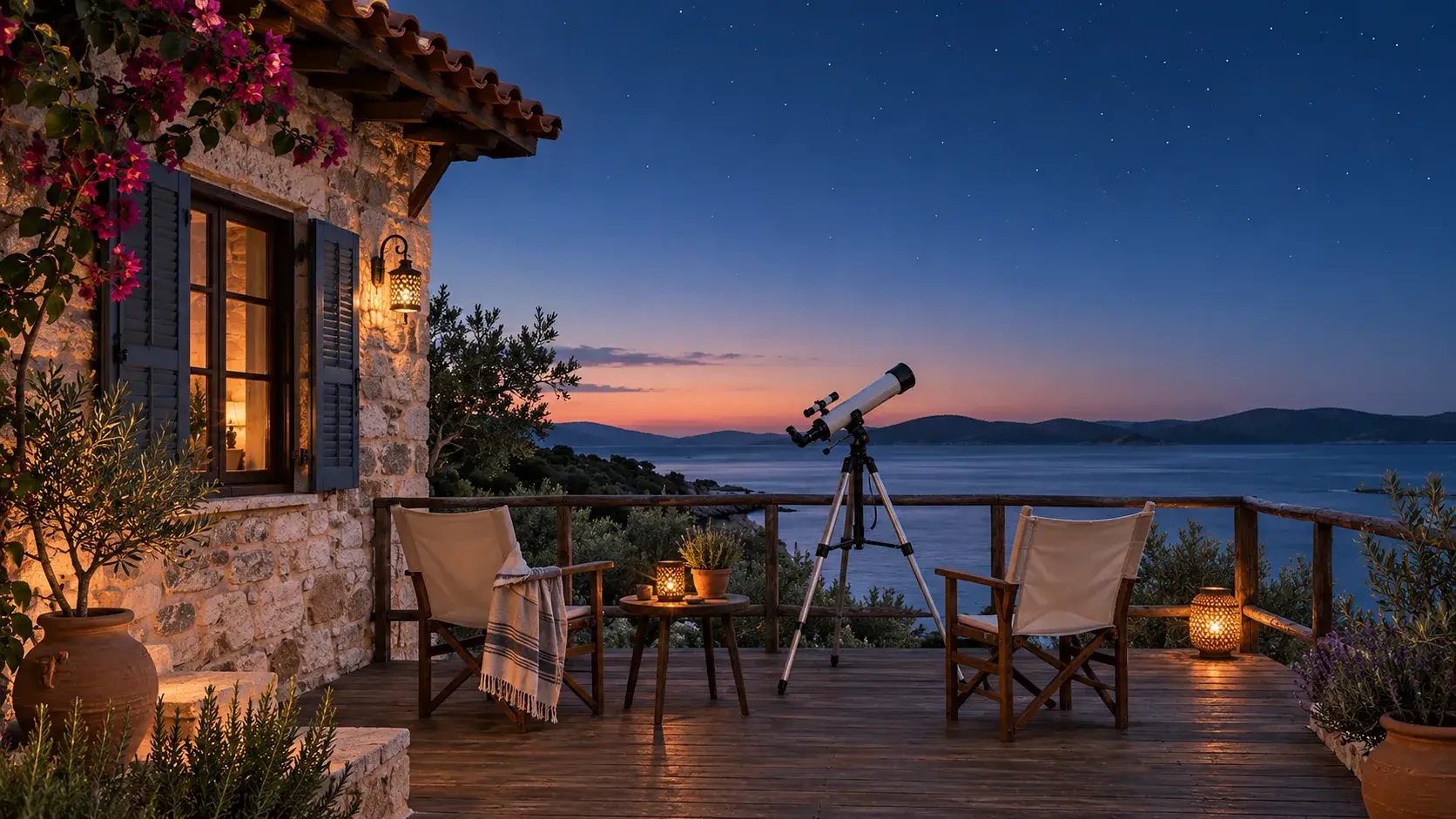
Spend the day wandering village streets, sit down to dinner by the sea, then step away from the lights and look up. On some trips, the best view appears after sunset. A stargazing holiday begins with a simple question: what can we see beyond the city sky we know so well?
Think of Bozburun, Lapseki and Adatepe as three trips you can plan independently. Choose between an on-site telescope experience, a science camp on scheduled dates and a stay inspired by the night sky.
Three places to stay for a stargazing trip in Türkiye
| Where to stay | The connection to the night sky | What to check before booking |
|---|---|---|
| Baldan Suites · Bozburun | The Küçük Oteller listing describes viewing the Moon and stars through a telescope | Opening dates, observation schedule, boat transfers and what’s included |
| Astroia Hotel & Science Camp · Suluca, Lapseki | Previously published programmes include night-sky observations and astronomy workshops | New dates and age groups. No upcoming activities were listed at the time of our check |
| Orion Adatepe · Ayvacık | The stone houses take their names from stars in the constellation Orion | Telescope access and guided observations could not be verified |
1. Baldan Suites, Bozburun: From the sea to the stars
Baldan Suites, ages 12 and up offers a waterfront stay in Bozburun, with access by boat. Its Küçük Oteller listing describes “Stars & Silent Sea Night,” a chance to observe the Moon and stars through a Celestron telescope. It’s a good starting point if you’d like to spend part of your seaside holiday looking up.
Ask whether the experience runs on your dates, whether someone will help you use the telescope, how long the session lasts, how many people can join and whether there is an extra charge. Since the hotel is reached by boat, discuss the return journey and transfer arrangements alongside your evening plans. For a November or winter trip, confirm that the hotel is open first.
What to do during the day? Leave time to explore Bozburun and get a feel for life on the coast. If the season and weather allow, add a boat trip. Spending the last part of the afternoon at the hotel saves a long transfer just before the observation session. For other options nearby, see our Bozburun hotels and destination guide.
Where to eat: Start the evening at the hotel’s waterfront restaurant. Ask what seafood and seasonal dishes are available that day. Plan dinner around the observation time so you can enjoy the meal without rushing to your next stop.

2. Astroia, Lapseki: A science-themed break with children
In Suluca, in the Lapseki district of Çanakkale, Astroia Hotel & Science Camp is worth looking into if your family would like to combine a hotel stay with an interest in astronomy. Its provider page on Hipokid lists past science and space camps, with programmes describing astronomy workshops and night-sky observations.
Programme dates: When we checked on 15 November 2026, the events page listed no upcoming activities. Check the next date, who leads the programme, which ages it suits and whether accommodation is included. Book participation in the camp separately if required.
For a child’s first night-sky session, start with an explanation suited to their age and a manageable finish time. Taking turns at the telescope, finding an object in the sky and getting a chance to ask questions can make the experience more memorable.
Daytime plans and meals: Spend some time on the Suluca coast and save a visit to central Çanakkale for another part of the trip. If you’re joining the camp, ask the organiser about meal times and what’s included. If you’re staying independently, ask about restaurant service. Find more stops and places to stay on our Çanakkale hotels page.
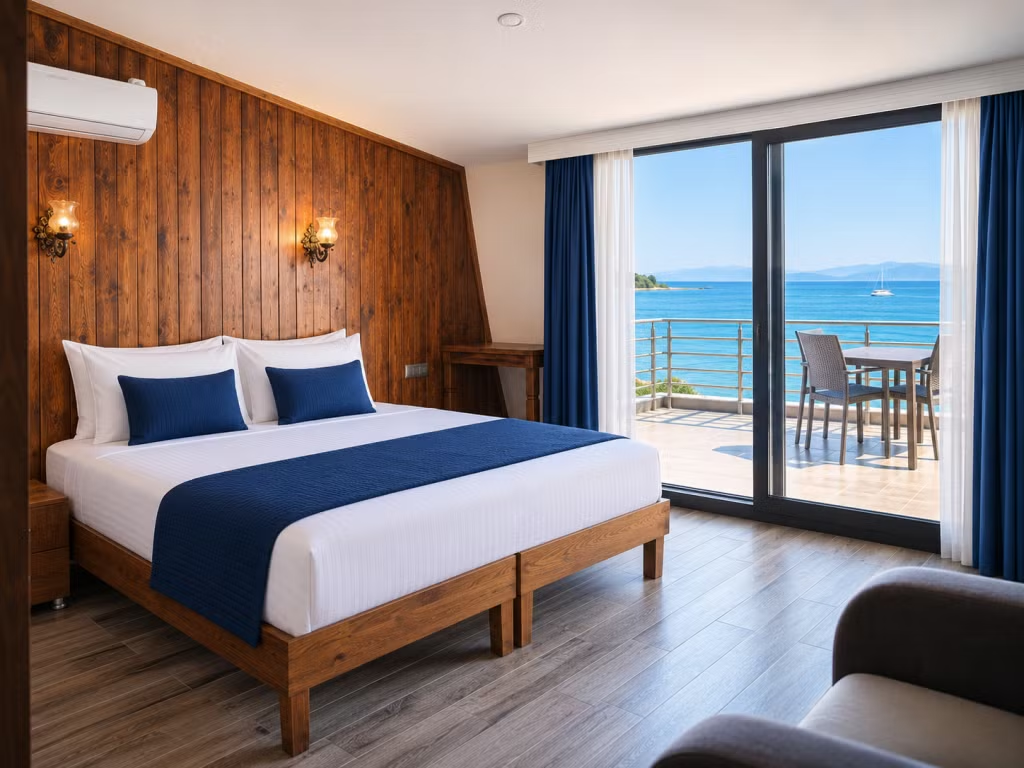
3. Orion Adatepe: Stone houses named after stars
In Adatepe village, Ayvacık, Orion Adatepe takes inspiration from astronomy. Its official website describes detached stone houses named after Rigel, Betelgeuse, Bellatrix and other stars in the constellation Orion. It’s a good fit if you’re drawn to village life, stone architecture and the night sky.
We suggest Orion Adatepe as a place to stay. We could not verify regular telescope sessions or guided astronomy here. If you’re planning your own observations, ask your host where you’re allowed to go, what the outdoor lighting is like and whether the area can be used at night. Sky darkness can vary from one spot in the village to another.
What to do during the day? Start with coffee in Adatepe’s village square and walk through its stone lanes. If you’d like to see the view near the Altar of Zeus, do the walk in daylight. For night-time observations, use a familiar, permitted area and avoid unfamiliar paths or rocky ground. Explore further with our Adatepe village guide and things to do in the Kaz Mountains.
Food and coffee: Orion’s official website presents Orion Lounge, in the garden of Taş Konak, as a stop for coffee, dessert and drinks. For a meal in Adatepe, you could also try Margu. Check service hours and plan dinner nearby before heading out for the evening. If you’re travelling with children, ask separately about age policies for the detached houses and Taş Konak.

How do you choose the best time for stargazing?
Start with what you want to see. For faint objects and broad star fields, hours with little moonlight can help. If you want to observe the Moon itself, choose your timing for that particular target. The new Moon is a poor choice for seeing lunar detail.
TÜBİTAK Bilim Genç’s monthly night-sky guides cover the objects visible each month and the phases of the Moon. Before settling on a date, check the current guide, the cloud forecast and where the Moon will be at your planned observation time.
Summer evenings can be easier to spend outdoors. Autumn and winter bring longer nights, along with cold, wind and the chance of rain. A sea view or an out-of-town location tells you little about measured sky darkness. This guide makes no claims about Bortle ratings or dark-sky certification at these properties.
Do you need a telescope, and what should you bring?
Start by looking at the sky with the naked eye. A wide view is especially helpful if you’re watching for meteors. A telescope comes into its own when you want a closer look at a specific object. On your first attempt, help from an instructor or experienced staff member can matter more than the telescope’s magnification.
- Layers for cool nights, plus a hat and gloves if the season calls for them.
- Somewhere to sit so you won’t have to stand for long, and a small cushion if you need one.
- A dimmable torch to avoid disturbing other observers.
- If you’re using a sky map on your phone, dim the screen and switch it off between checks.
- If you plan to take photos, bring a suitable tripod. The camera may capture a different view from what you see with the naked eye.
Five questions to ask when booking
- What day and time is the session? Is it a regular service, available on request or part of a scheduled camp?
- Who will be there to help? Is there a guide, instructor or staff member who can help with the telescope?
- What’s included? Ask separately about the room, activity, meals, equipment and transfers.
- What happens if it clouds over? Ask about indoor astronomy sessions, alternative activities, rescheduling and any fees.
- Is the site suitable for use at night? Check access permissions, ground conditions, lighting and return transport in advance.
If you’re looking for an organised observation session, you can also follow event announcements from the Turkish National Observatories. Check the application process, participation rules and location separately from your hotel booking.
Editor’s tip: If you can stay at least two nights, you’ll have more than one chance at clear skies. Choose a place you’ll enjoy by day, too. Village lanes, a coastal walk and a good meal can make the trip worthwhile even on a cloudy night.
FAQs
Where can I plan a stargazing holiday in Türkiye?
This guide covers three options: Baldan Suites in Bozburun, Astroia in Suluca, Lapseki, and Orion Adatepe in Ayvacık. They offer different ways to plan a trip: on-site observations, a camp on scheduled dates or a place to stay while making your own plans.
Which hotel lists a telescope experience?
The Küçük Oteller listing for Baldan Suites describes Stars & Silent Sea Night, a telescope session for viewing the Moon and stars. Ask the hotel whether it runs on your dates, who leads it and what the price includes.
How do I get to Baldan Suites?
The property lists access by boat. When booking, ask about pickup from Bozburun, the last transfer and return arrangements after dark. Confirm that the hotel is open if you’re travelling in winter.
Does Astroia run astronomy activities every night?
Past camps included astronomy workshops and night-sky observations. The provider’s page listed no upcoming activities when we checked on 15 November 2026. Ask about new dates and what participation includes.
Is there a telescope service at Orion Adatepe?
Orion’s story draws on astronomy, and its stone houses are named after stars. We could not verify regular telescope sessions or guided observations. We suggest it as a place to stay.
Is a new Moon or a full Moon better for stargazing?
Little moonlight helps when looking for faint objects or broad star fields. If you want to observe the Moon itself, the best phase and time depend on what you want to see. Check a current night-sky calendar.
Do I need a telescope to go stargazing?
You can learn to recognise stars and constellations with the naked eye. A broad view of the sky helps when watching for meteors. Use a telescope to see specific objects in more detail.
Am I guaranteed to see the Milky Way or meteors from the hotel?
Visibility depends on cloud cover, moonlight, season, time, how open the horizon is and artificial lighting. This guide makes no claims about measured sky darkness or the likelihood of seeing a particular event.
What season is best for a stargazing holiday?
You can plan a trip in different seasons depending on what you want to see and the weather. Autumn and winter offer longer nights but can bring cold and rain. In summer, pay attention to the Moon phase and night-time lighting. Check when the hotel is open.
Is stargazing included in the hotel rate?
Ask separately about the activity, equipment, instructor, meals and transfers. A room booking alone does not include a viewing session or camp participation. Check cancellation and rescheduling terms in case of poor weather.
Similar Posts
This Time, the View Is the Night Sky: Stargazing in Türkiye

A Holiday Made for Rest: Sleep Tourism in Türkiye

Come Home with a New Hobby: Workshop Holidays in Türkiye